Phone: +86-755-2357-1819 Mobile: +86-185-7640-5228 Email: sales@ominipcba.com whatsapp: +8618576405228

Navigating Chinese PCB Manufacturing: A Strategic Guide
Vetting a Chinese PCBA partner requires analyzing SMT precision, DFM feedback loops, and material traceability. Optimize your hardware reliability and TCO.
PCB TECHNOLOGYPCB MANUFACTURINGPCB ASSEMBLY
OminiPCBA
2/9/20264 min read
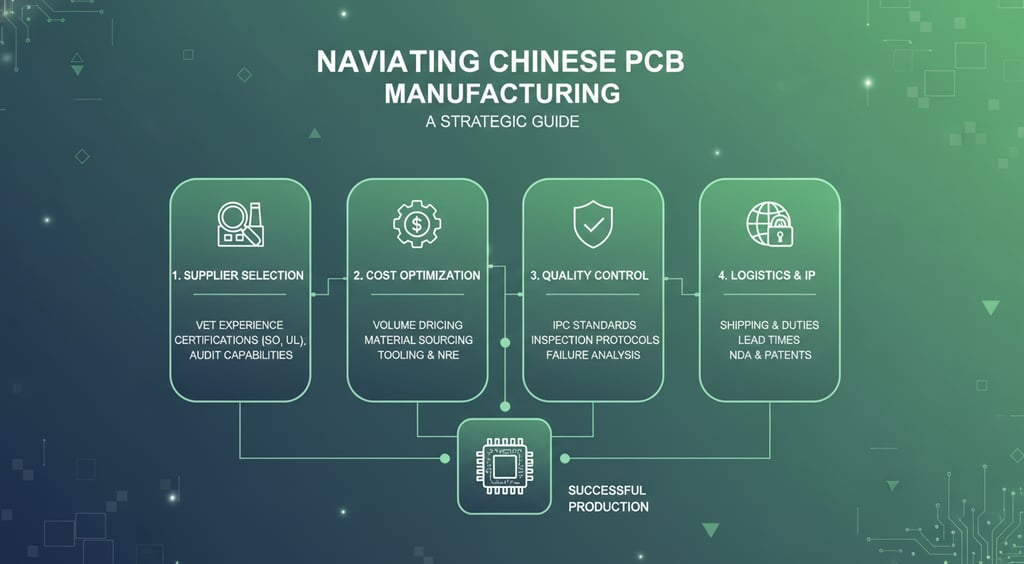
Out of nowhere, the way electronics get made has changed - price tags aren’t king anymore. Instead, how tough the tech is and whether you can actually trace every part matters more now. Hardware builders and buyers used to hunt for cheap suppliers; these days they’re checking Chinese partners like detectives. A smooth batch rollout versus broken units showing up in customer hands? That difference hides in tiny gaps inside a factory’s quality checks. What seemed minor before now decides everything.
The Geographic Advantage and Ecosystem Depth
Picking a factory inside an industry-focused zone like the Pearl River Delta brings benefits you do not see just on delivery timelines. In Shenzhen, being close to shops selling parts and materials means problems with stock get fixed fast - while others stall. Take Ominipcba as one example showing how nearby networks help finish jobs quickly while still checking every part is real. Because everything fits together so tightly here, even tricky circuit boards shift smoothly from testing into full runs. Getting through new product stages feels easier when supplies, skills, and tools are all within reach.
Technical Insight From Manufacturing Feedback
Not every factory just reads your Gerber file - some dig deeper, asking why things are placed where they are. When it comes to building circuit boards, checking how a design can actually be made helps dodge roadblocks down the line. Whoever signs off on your layout without discussing copper spacing, openings in solder cover, or heat dissipation might overlook flaws that hurt output later. Skilled collaborators spot trouble spots like trapped etching fluid or uneven component pull early, even before pricing begins. Working this way shifts the dynamic: instead of order taker, you get a teammate scanning for weak points others miss.
Smt Precision And The Science Of Solder Deposits
Out near the start of making electronics sits the SMT method, with precision down to tiny micrometer gaps. To judge a factory right, skip the machine logos and check how tightly they manage each step. Modern dense circuit boards need 3D SPI - it’s not optional. Watching solder paste while it prints lets the line catch too little or too much before parts go on. Mistakes from bad deposits vanish when measurements happen live.
Some top-tier production sites prove how crucial it is to place 3D automated optical inspection right after the reflow stage. Shadows might trick older flat imaging methods, yet three-dimensional scanning captures depth, mapping out solder shapes accurately. Hidden connections under components like ball grid arrays or quad flat no-leads get fully checked this way. What matters most shows up clearly - joint quality matching strict assembly rules happens only when volume, not just surface, gets measured.
Material Quality and Where It Comes From
What keeps a circuit board working well often comes down to the layer it's built on. Offshore makers sometimes swap out named materials - like those from Rogers, Isola, or Panasonic - for substitutes that can’t handle heat or electrical demands just right. Instead of guessing, strong partnerships mean knowing exactly where the raw stuff comes from. Matching how much heat the board can take - and how it expands when warm - to how it will actually be used makes all the difference in staying stable under stress.
Even small details like how thick the copper is inside hole walls matter more than they seem. Though your order says 1 ounce, what ends up on the board shifts slightly due to processing steps. One factory trusted across sectors, Omnicpcba, shares real lab images cut straight through plated holes - proof the coating survives repeated heat stress without failing.
Find Hidden Problems with Better Checks
Tiny parts like 0201 or 01005 are too small for eyes alone to check properly. Because of this, boards with BGA or LGA chips require AXI - no exceptions. Hidden gaps inside solder balls might come from trapped gas or flawed heating during assembly. These flaws sometimes stay quiet until the device is already in a user’s hands. When a factory shares X-ray views of buried joints, it shows they care about solid builds.
Testing Strategies: ICT vs. FCT
Not stopping at visual inspections, true defect prevention demands electrical proof. Poking each part with a bed-of-nails setup, In-Circuit Testing confirms positions and values - spotting breaks or unintended links code alone won’t catch. When devices grow intricate, only live simulation separates working units from flawed ones. Functional Testing acts like the product’s future world, making sure chips talk right and voltage holds when pushed. Building test fixtures internally lets a factory shape quality smoothly, instead of passing the burden back to you.
Transparency and the Ethics of Traceability
When chips get shaky, fake parts become a big worry. Working with someone in China who buys only through approved sellers makes things safer. Knowing where each piece came from - right down to the lot number on a circuit board - cuts danger sharply. Find a flaw out there? A clear supplier will name just the units tied to it, so everything else keeps running.
Scaling Affects Total Cost
What seems cheapest up front might cost far more once you add repairs, missed deadlines, and product returns. Working with a team that has strong engineering know-how - like what's shown at Ominipcba - means moving from ten test units to ten thousand production pieces without hiccups. Being able to scale doesn’t only depend on how many machines are available. It hinges on whether each step can be repeated exactly the same way every time.
What matters most? A Chinese factory that treats quality like a puzzle to solve, not a box to check. When design for manufacturing stays solid, when high-tech inspections catch flaws early, when every material batch gets tracked - then products stand a real chance. Strong partnerships form around these details, letting new ideas work well today and keep working years later.
Related Articles
Contacts
Email: sales@ominipcba.com
Mobile: +86-185-7640-5228
Copyright © 2007-2026. Omini Electronics Limited. All rights reserved.
Head Office: +86-755-2357-1819
Services


Your China turnkey partner for electronics manufacturing. We bridge design to delivery by leveraging the Shenzhen electronics ecosystem for precision engineering and streamlined PCBA supply chain logistics.
Ready to Build?
Get a comprehensive quote within 24 hours.