Phone: +86-755-2357-1819 Mobile: +86-185-7640-5228 Email: sales@ominipcba.com whatsapp: +8618576405228

Technical Framework for Selecting Custom PCBA Partners
Hardware failure often stems from poor partner selection. Learn how to evaluate SMT precision, DFM feedback, and traceability in custom electronics production.
PCB TECHNOLOGYPCB MANUFACTURINGPCB ASSEMBLY
OminiPCBA
2/12/20264 min read
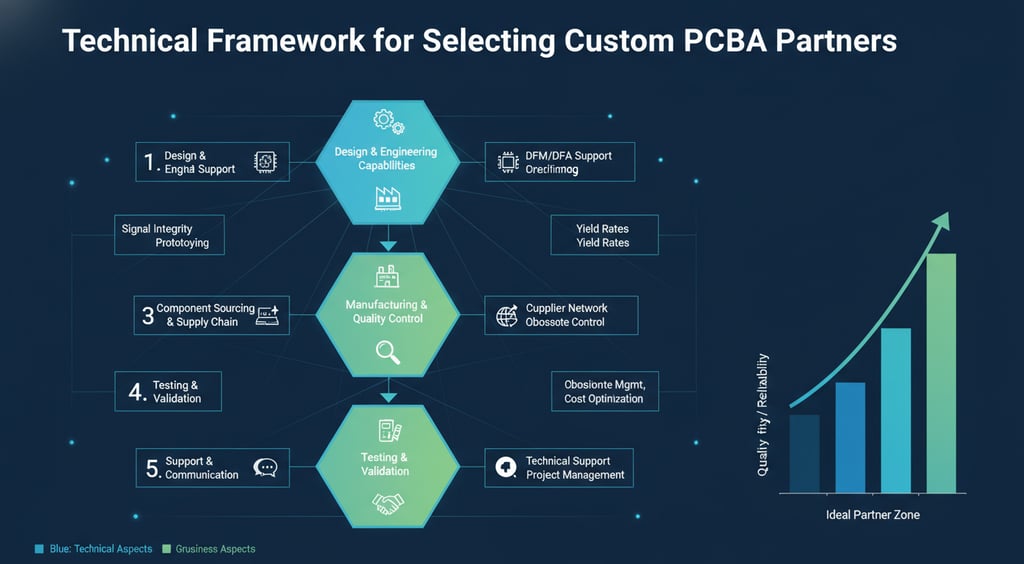
Starting with a working circuit diagram, turning it into mass-produced gear often stumbles on hidden technical snags. Within electronics manufacturing services, what sets apart just another supplier from someone you rely on comes down to spotting trouble long before any parts get assembled. Buyers and design engineers need more than low prices - they require deep checks into engineering support systems, how seriously mistakes are taken, and whether materials keep arriving when needed.
The Engineering Impact of Including DFM
Before any part gets set on a board, the real work begins. Skipping DFM means risking failure down the line. Top builders won’t just run with your Gerber data - they’ll question every detail. Tiny gaps in traces might trap corrosive material, causing shorts later. When pads sit too close without proper masking, bridging becomes likely. Heat distribution matters too - if one pad pulls heat faster than its pair, components can stand up like tombstones when heated.
A heads-up from the maker about part placement or pad shape cuts future costs more than it first seems. Take Omnipcba’s trial runs, for instance - spotting trouble spots ahead of time, like uncovered vias sitting right in a solder pad, avoids messes later. That kind of catch means fewer wasted boards. Time adds up too - we’re talking weeks saved when fixes happen before full rollout. Money stays put instead of vanishing into discarded materials and redo cycles.
SMT Precision with HDI Interconnects
When parts get as tiny as 0201 or smaller, like 01005, mistakes in SMT assembly become nearly unavoidable. Choosing who you work with means checking how precisely they place components, especially on HDI circuit boards. Look closely at when their machines were last calibrated - older equipment can fall short. Skill matters too - not just stacking layers, but doing it right with microscopic vias that link them.
What sets some manufacturers apart isn’t just equipment - it’s how they use it. While most reflow ovens come with multiple heating sections, skilled teams adjust settings for each circuit board layout specifically. That way, heavy parts such as inductors heat enough to bond well, yet nearby delicate pieces - sensors or BGAs - don’t get too hot. Poor control here causes weak connections, the kind that seem fine at first but break later out in the field. When failures happen after shipping, trust in the name behind the product takes a hit.
The Quality Infrastructure AOI X Ray and Testing
A single glance won’t catch what hides inside today’s circuitry. When chips come packed like BGA or QFN types, only sharp 3D X-ray eyes can truly see. Skip the X-rays and you’re blind to connections tucked under plastic shells. Hidden gaps form during assembly - maybe gas escapes, maybe bad paste - and they stay invisible until problems spark later. These tiny pockets inside joins might seem small, yet they open doors to glitches no quick test can trace.
Right off the bat, 3D Automated Optical Inspection fits best when built into the SMT process, not tacked on later. Take Ominipcba as a case - their use of 3D AOI catches uneven solder paste and odd component heights while production runs, showing how live feedback keeps faulty boards from slipping through. Instead of waiting till the end, catching issues early reshapes quality control by using constant measurement.
Not just relying on visual or X-ray inspections, how tests are chosen - like In-Circuit versus Functional Testing - depends heavily on how intricate the device is. While one spots physical flaws such as broken connections or unintended bridges, the other checks if the circuit behaves correctly under real operating code. When a factory builds its own functional test rigs internally, delays shrink without extra cost. Only then does actual performance match what the software expects.
Material Sourcing and Counterfeit Mitigation
One shaky part can undo an entire circuit board. When chip supplies swing wildly, fake or shady components might slip into assembly. Trusted builders stick to verified suppliers to block risky imports.
A single faulty capacitor can ripple through hundreds of devices. When that happens, knowing exactly where each part came from makes all the difference. Some shops track nothing beyond a label on a box. Others build a full history for every spool, every connection point. If a maker flags one batch as flawed, only those with clear records can act fast. The ones without? They guess, delay, replace blindly. Clear logs turn chaos into control. Precision like that does not happen by accident.
The Shenzhen Edge Close Location Fast Movement
Out here, where factories stretch for miles, every mile closer means faster moves. Near places like Shenzhen, parts aren’t shipped - they’re handed off, passed quickly between shops that know each other by name. Being close cuts wait time, turns delays into quick swaps. Hours replace days when pulling rare chips, odd-shaped coolers, or boxes made just for one job. Distance matters less when everything needed lives next door.
From the start, watching how a known player such as Ominipcba runs things shows what's possible with local supply chains in full-package solutions. Instead of juggling separate suppliers for making boards, finding parts, and putting it all together - where blame gets tossed around if something fails - the whole process lives under one roof. This single control point keeps progress steady, avoids miscommunication, and wraps production into one clear line of sight.
Scaling from prototype to mass production
One frequent misstep when building hardware? Picking a partner who can’t grow with you - or won’t bother trying. Tiny teams often stumble past early models, missing tight rules needed once thousands are built. On the flip side, giant manufacturers sometimes treat new companies like background noise, too busy chasing bigger clients to notice quicker ramp-ups.
A good fit works smoothly in the middle ground - using top-tier tools such as 10-zone reflow ovens and auto-selective solder systems for larger runs, yet staying nimble enough to back new product launches. Because of this stretch, when your customers ask for more, production keeps moving without rebuilding everything elsewhere.
Investing in Reliability
A wrong pick here can derail everything - how often things break, when products ship, even profit margins. When firms pay attention to design feedback before production, use advanced imaging to spot flaws early, then insist on clear parts sourcing, they stop treating assembly like just another order. Instead, collaboration grows where engineering quality leads. Solid performance does not get bolted on later - it shows up only if each connection gets handled like it keeps a machine alive.
Related Articles
Contacts
Email: sales@ominipcba.com
Mobile: +86-185-7640-5228
Copyright © 2007-2026. Omini Electronics Limited. All rights reserved.
Head Office: +86-755-2357-1819
Services


Your China turnkey partner for electronics manufacturing. We bridge design to delivery by leveraging the Shenzhen electronics ecosystem for precision engineering and streamlined PCBA supply chain logistics.
Ready to Build?
Get a comprehensive quote within 24 hours.